


Ask five woodworkers about the best saw for cutting wood and you’ll get six answers. One swears by his old cabinet saw, another won’t touch anything except a sliding miter saw, and the guy in the corner still cuts half his joinery with a Japanese pull saw. They’re all a little bit right. The real answer depends on what you cut, how many pieces you cut, and how much you care about every part coming out the same length.
We build programmable saw stops and pusher systems at RazorGage in Ames, Iowa, and we’ve been at it since 2001. So we look at this question from the measuring side of the saw, which is the part most people forget.
Start With the Job, Not the Saw
Before you spend any money, write down what you actually cut in a normal week. Ripping long boards down their length is one job. Crosscutting them to length is another. Breaking down plywood, cutting curves, resawing thick stock and trimming small joinery parts are all different jobs again, and no single saw does every one of them well. A table saw rips beautifully and crosscuts long boards badly. A band saw handles curves with ease, but nobody wants to cut forty identical rails on it. When someone tells you one saw beats all the others, they usually only cut one kind of thing. In most shops, the best saw for cutting wood is simply the one that matches your most common cut.
The Main Choices
Table Saw
A table saw is the heart of most shops. It rips boards and sheet goods against a straight, repeatable fence, and with a decent sled it can crosscut too. The downsides are size, dust, and the respect it demands. Kickback is real, so use a riving knife and push sticks.
Miter Saw
For crosscuts and angles, a miter saw is hard to beat. A sliding model handles wider boards, and a basic chop saw does the job when you’re cutting narrow stock to length. If you cut the same lengths again and again, this is the saw where a good stop system pays for itself fastest.
Circular Saw, Band Saw and Hand Saws
A circular saw is the cheap, portable answer. It’s great for breaking down plywood or rough lumber, and with a straightedge guide it cuts cleaner than people expect. Band saws are for curves and resawing, jigsaws are for quick cutouts, and a good pull saw is what you reach for when you want control more than speed.
Why Measuring Beats Blade Size
Here’s what a lot of shops learn the hard way. A great saw with a sloppy measuring method still makes bad parts. Pull a tape, mark a pencil line, line it up by eye, and sooner or later you’re off by a sixteenth. Do that forty times on a set of cabinet parts and the errors stack up. A hard stop fixes most of this, because the stop does the thinking and the operator just feeds the wood. That’s why even the best saw for cutting wood is only as good as the way you position the material against it.
Where RazorGage Fits In
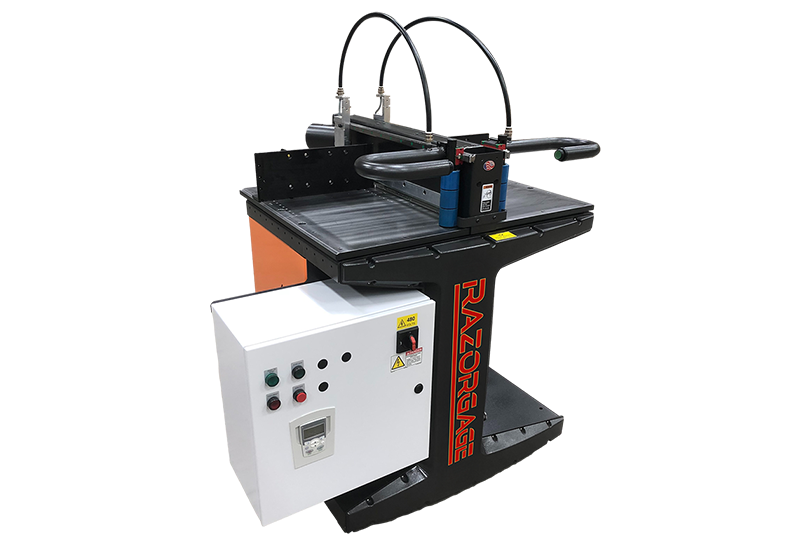
RazorGage makes programmable saw stops and pusher systems, built in Ames, Iowa. The goal from the start was machine tool grade accuracy at a price a small shop can live with. The RazorGage RG3 uses a Hiwin hardened and ground linear bearing rail with two recirculating ball bearing blocks, which is a technical way of saying it stays rigid and holds its accuracy for a long time. The XT-PC is the more affordable model, and it comes with a rugged Android tablet running software that’s easy for a new operator to pick up. Every controller has built-in Wi-Fi, so cut lists can reach the saw without anyone copying numbers onto a scrap of paper.
There’s also a no-motor option. The GlideRule chop saw station is a manual stop that you adjust and lock without stepping away from the saw. It uses extruded aluminum tables on modular truss sections, so you can order the length your wall can handle. If you’re not ready for a motorized stop yet, it’s a sensible first step.
When an Optimizing Saw Makes Sense
If you cut a lot of solid wood and hate watching good lumber go in the scrap bin, an optimizing cut-off saw is worth a serious look. The RazorOptimal sits at the top of our line. It works with defects you mark in crayon and plans the cuts so clean wood ends up in parts instead of waste. It can label parts, print on them with an inkjet, and even add pocket hole drilling and scribe marking for face frame joinery.
How to Choose for Your Own Shop
If you’re a hobbyist, start with a good table saw or miter saw and learn to set up clean, square cuts. If you run a small cabinet or furniture shop, the saw you already own is probably fine, and a programmable stop will do more for your output than a new saw would. If you’re cutting production volumes, look at a full system. Whatever your size, buy the saw that fits your most common cut, then fix the measuring. A short call with someone who has set these up before can save months of guessing.
Final Thoughts
There’s no single winner here. Pick the saw that fits your cuts, add a reliable stop, and your parts will come out the same every time. If you want to see how far this can go, ask us about the RazorOptimal and we’ll walk you through it.
FAQs
What is the best saw for cutting wood for a beginner?
A compact miter saw or a circular saw with a straightedge guide is a good start. Both are affordable, easy to learn, and cover most basic cuts. Add a table saw later.
Can one saw handle every cut?
Not really. A table saw rips well, a miter saw crosscuts well, and a band saw handles curves. Most shops end up with two or three saws and pick the right one for the job.
What is a programmable saw stop?
It’s a motorized stop that moves to the exact length you enter, so you don’t measure each piece with a tape. You slide the wood against it and cut. The result is faster work and parts that match each other.
How many teeth should a wood-cutting blade have?
For a 10-inch blade, around 24 to 40 teeth suits ripping and general cutting. Go to 60 or 80 teeth for smooth crosscuts.
Does RazorGage make saws?
RazorGage makes the positioning side: programmable saw stops, pushers, and the RazorOptimal optimizing cut-off saw system. The stops are built to work with your existing saw. Call the team to find out which setup fits your shop.
Contact Us
RazorGage
57006 241st Street, Ames, IA 50010
Phone: 515.232.3188
Email: sales@RazorGage.com