


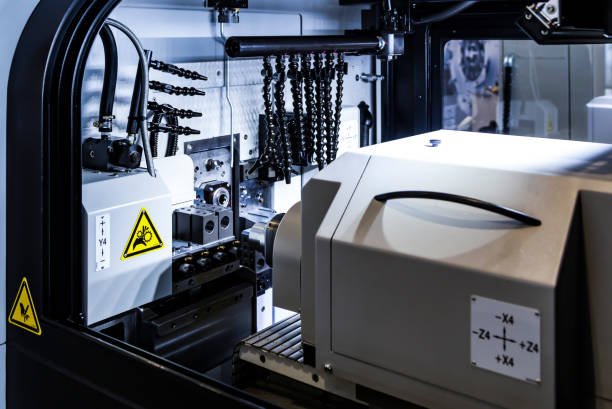
Choosing equipment for high-precision production isn’t a decision engineers should make lightly. A machine might seem to do the job well on paper, but that doesn’t mean it’s able to perform in real life. Each workpiece has specific requirements depending on what it’s made to create. Whatever the type of machining, manufacturing processes like the production of tiny metal parts, medical parts, automotive fittings, or even large industrial components, engineers need to know the key factors like the required dimensions and tolerances, the number of parts to be produced, and allowable errors. Then they can investigate whether a Swiss machining center is a good solution, and whether the machine is capable of doing the job. Choosing equipment just because it looks good or is associated with a certain brand can be costly later. Always start from the end product. Then research the machine.
Machine Accuracy and Repeatability Are More Important Than You Might Think
Of course you want your machine to be accurate, but perhaps more important, it needs to be repeatable. Of course the machine can get one part in tolerance, but can you really ask it to make 1500 as it claims? This is where precision manufacturing can fall. You should look at the accuracy of positioning, spindle life, vibration levels, and the ability of the machine to produce consistent results when it has been running for a longer period of time. It can cost a lot of money to make even small changes to a part that is designed to be manufactured with tight tolerances. In all reality, a machine that has been demonstrated well will not necessarily be reliable in everyday production. Be sure to request concrete historical data, run parts in real conditions, and look at how the machine behaves over time.
Material Compatibility and Cutting Capabilities
Not all machine tools use the same performance levels when machining each material. Certain materials, such as stainless steel, aluminum, brass, titanium, and others, have different machining specifications. Some are fast and easy to machine, while others can produce excess heat, excessive wear on the tooling, and an unwanted surface finish on the component. Carefully consider the materials that will be used on a regular basis and verify that the criteria can be accommodated on the selected machine. Factors such as spindle speed, range of available cutting tools, the machine’s rigidity, coolant supply, and machining capacity are all relevant. For example, machining an unusual new alloy might require stronger tools or better heat extraction. Do not take it for granted that a machine made by a reputable manufacturer for accurate manufacturing operations can cut all materials equally well. Make sure to confirm its machine limits. It is far preferable to realize this before installation than when a job is partially complete.
Testing CNC Controls and Automation Capabilities
Computer numerical controls (CNC) form the foundation of modern-day production equipment, but not all controls provide the same benefits. When evaluating controls, look at programming options, interface preferences, software features, and the ability to talk with other production equipment. Although having several programming options is useful, a complex control interface can slow operators down, especially when working with frequent setup changes. Automation is one more aspect to consider. Automatic tool changers, bar feeders, robotic loading, and integrated inspection functionality can increase productivity and reduce the labor input required; however, it doesn’t make sense for every operation to have each automation option. The bottom line when considering controls is to choose one that matches the workflow of that piece of equipment. Controls should make production easier, not add a further complication for the shop team.
Tooling Flexibility and Setup Requirements
Tooling has a bearing on machining accuracy and cycle time, and will affect the finish quality of components. Check that your machine can support the cutting tools you need for your application, and that its tool changing capabilities are also reasonably simple. This becomes vital when you operate different component designs, or change over frequently. How long it takes to set up for your next job could quietly eat into what is left of your manufacturing time. If a machine takes too long to prepare for its next job, it could become a bottleneck – even if its cutting ability is excellent. Have a look at the availability of tools, how well they can handle different tools and holders, and how to cope with tool wear. See whether this can be done easily by operators, without hours of fiddling. While it’s handy to have a flexible set-up, it should not be at the expense of stability or accuracy.
Thermal Stability, Vibration Control, and Machine Construction
The reality is that temperature variation and vibration cause a lot more variation in machining than many might expect. On long manufacturing runs, the machine is heated up, parts are expanded, and machining conditions are constantly changing. The small variations in temperature and vibration can cause the work to be dimensionally different, especially where extremely tight tolerances are required. For this reason, the designer should consider the construction of the machine, the thermal compensation features, cooling of the spindle, as well as the vibration rating. A strong machine is more resistant to the cutting forces, and thus, results will be more precise. The right foundation and installation are also extremely important. You can’t expect to get the precision of a machine on an unstable foundation.
Maintenance, Technical Support, and Equipment Reliability
Another aspect of the equipment decision is what to do when the machine needs maintenance, replacement parts, or technical support. Lost production due to unplanned downtime can be devastating and impact sales commitments. When choosing a piece of equipment, look for maintenance time (time between scheduled maintenance), availability of spare parts, response times from the manufacturer, and support from their technical service. Inquire whether local technicians are qualified to perform most repairs or whether every time a problem is encountered, it must be done from overseas. In addition, review the history of the machine, if there is any, and look for common areas of wear. Consider routine maintenance, including inspections, lubrication, calibration, and tool checks to prevent larger failures later. It is not just a matter of buying a machine that works today; it should work tomorrow as well.
Production Capacity, Operating Costs, and Future Requirements
Don’t limit the comparison to the current production run. Who’s to say that the machine which is sufficient for the present workload won’t be overwhelmed when order quantities increase, or product lines evolve? Keep in mind cycle times, available working capacity, energy costs, tooling costs, operator training needs, and maintenance and upkeep costs. These are the costs that will impact the true bottom line when calculating the cost of owning and operating the machine. Is there room to grow? Will the machine be able to meet future production demands, or will it need to be replaced again? It might make sense to buy a slightly larger machine that will be able to meet the workload, as long as the additional investment in equipment and tooling will be truly justified. Never buy a bigger machine because the money is available, but do know that increased production requirements and operating costs are far less costly than larger or more sophisticated specifications.
Choosing Your Equipment for Precision Manufacturing
And finally, your choice of equipment for high-precision production is about more than just the specifications of one machine. Accuracy, repeatability, workpiece compatibility, automation, tooling, maintenance, and ongoing operating costs all need to be considered. Machine comparisons, sample runs, and real part inspection should be standard practice. And if you’re considering CNC Swiss machining, for instance, think about whether your new equipment is up to the task when it comes to long, thin parts, extreme detail, and repeated cuts. These factors all matter far more than any marketing slogan on a brochure. Ask the operators, too, because they understand machine limitations better than anyone. The bottom line is you have to ask the right questions, be willing to challenge your assumptions, and assess your real needs. Do those things, and your machine will do its job without the headache.