


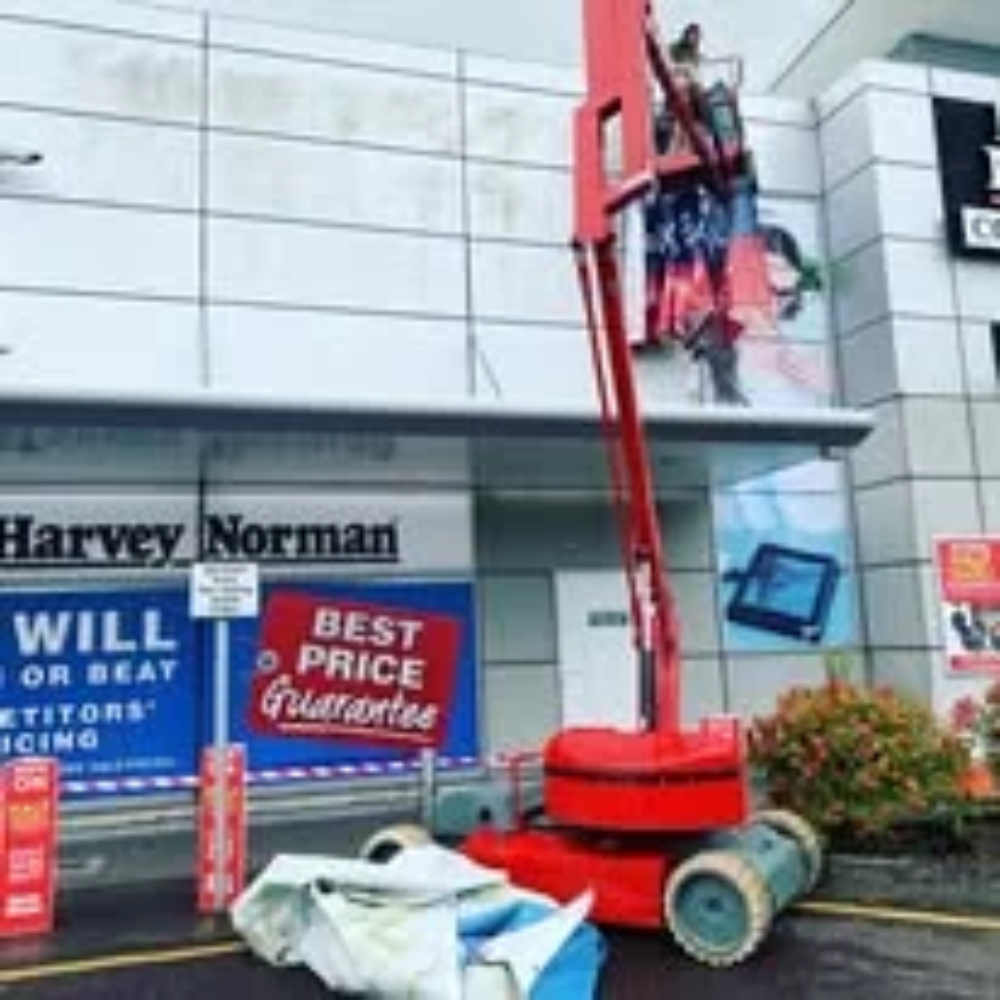
Every so often a business owner looks at the quote for fitting a sign, sees a number that stings, and thinks, how hard can it be? A drill, a ladder, a few screws. Done by lunchtime. And to be fair, some small jobs really are that easy. But a lot of the time, paying for proper sign installation services is the cheaper option once everything’s added up, and that’s the bit people only work out afterwards. A sign hanging off a wall in the wind isn’t a minor thing, it’s a safety issue, a planning issue and a money issue all at once.
When DIY Actually Makes Sense
Let’s be fair, there’s a point where it’s fine. A lightweight sign going on a ground floor wall of a building the owner controls, no electrics, no height, nothing dangling over a public footpath. A small window graphic. A little plaque by the door. Those can be done with a spirit level, patience and the right fixings. The trouble starts when owners judge every job by that standard. Size, weight, height, lighting and location all change the picture, and what feels like a Saturday job can turn into something much bigger once the ladder’s up and the wall turns out to be hollow block.
The Wall Is Never What It Looks Like
Truth is, the surface decides almost everything. Brick takes one kind of fixing. Render takes another, and render can hide crumbly stuff underneath that won’t hold a screw for long. Metal cladding is different again, insulated panels different again, old stone different again. Someone drilling blind can hit a cable, a pipe, a damp course, or just a patch of weak material that lets go six months later. Installers who do this daily have a feel for it, they test, check, probe a bit before committing. A wrong fixing doesn’t fail on day one, it fails during the first proper storm.
Wind Does More Than People Expect
A big flat sign is basically a sail. Gusts hit it hard, and Irish coastal weather isn’t shy about gusting. Weight, mounting depth, number and spacing of fixings, how the load travels back into the wall, all of that has to be thought through, not guessed. Signs sag, twist, rattle, crack at the corners, and in the worst cases come down altogether, which is the bit that really matters because something falling from height onto a footpath is serious. Insurance doesn’t always look kindly on a DIY job that fails either. Professionals calculate loads without making a show of it, it’s just part of how they work.
Electrics Change Everything
Illuminated signs bring wiring, drivers, transformers, weatherproofing, and all of it needs doing right. Water and mains power get on badly. Poorly sealed connections let moisture in, and a dead sign is the best case, the worst is a real fire or shock risk. Cable has to be the correct type for outdoor use, junctions have to be sealed properly, and in most situations a qualified electrician needs to sign off the connection to the supply. That’s the point where DIY stops being a money saver and starts being a gamble that no one really wants to take.
Height, Access and the Boring Legal Bits
Working at height has rules, and for good reason. A proper scaffold or access platform costs money, a borrowed ladder leaning on a first floor fascia is how people end up in hospital. Then there’s planning, which catches loads of owners out. External signage can need permission depending on size, position, lighting and the type of building, and protected structures are stricter again. Among the signage companies Cork has to offer, the experienced ones already know what the council tends to accept, and they’ll flag problems before anything’s drilled, not after a letter shows up asking for the thing to come down.
What Pros Do That Owners Don’t See
A lot of the work happens before the fixing even starts. Measuring twice, checking levels against the building rather than trusting the eye, because a slightly crooked sign looks worse than people expect, it drags the whole shopfront down. Templates for hole positions. Sealant round every penetration so water doesn’t creep in behind. Cleaning up afterwards, which sounds small but isn’t. And they’ve got the right kit, hoists, cherry pickers, proper drills, specialist anchors, stuff that’s not worth buying for a one-off job and hard to hire without knowing exactly what’s needed. Time matters as well. A crew that’s done a hundred of these gets it up in a morning, while an owner learning as they go can lose a whole weekend, plus the trading hours spent worrying about whether it’s straight.
The Real Cost of Getting It Wrong
Here’s where the maths flips. A failed DIY install usually means removing the sign, patching the holes, maybe repairing damaged render or cladding, replacing a cracked panel, and then paying a professional to do it properly anyway. That’s the original saving gone and then some. Add the downtime of a shopfront looking half finished, plus any damage to a neighbour’s property or a passer-by, and the quote that looked steep starts looking reasonable. Cheap isn’t the same as good value, and installers know it, they’ve seen the repair calls come in often enough.
So, can it be done without a pro? Sometimes, for small simple jobs. The short answer for anything bigger, higher, lit or heavy is no, don’t. Hand it to a team that fits signs for a living, and when comparing signage companies Cork has to choose from, ask who actually does the fitting, what fixings they’ll use, and whether the work’s covered. Those three questions sort the careful ones from the rest fast, and they’re far cheaper to ask than the repair bill later on. A bit of nosiness at the start saves a lot of grief at the end, and any decent company won’t mind being quizzed one bit.