


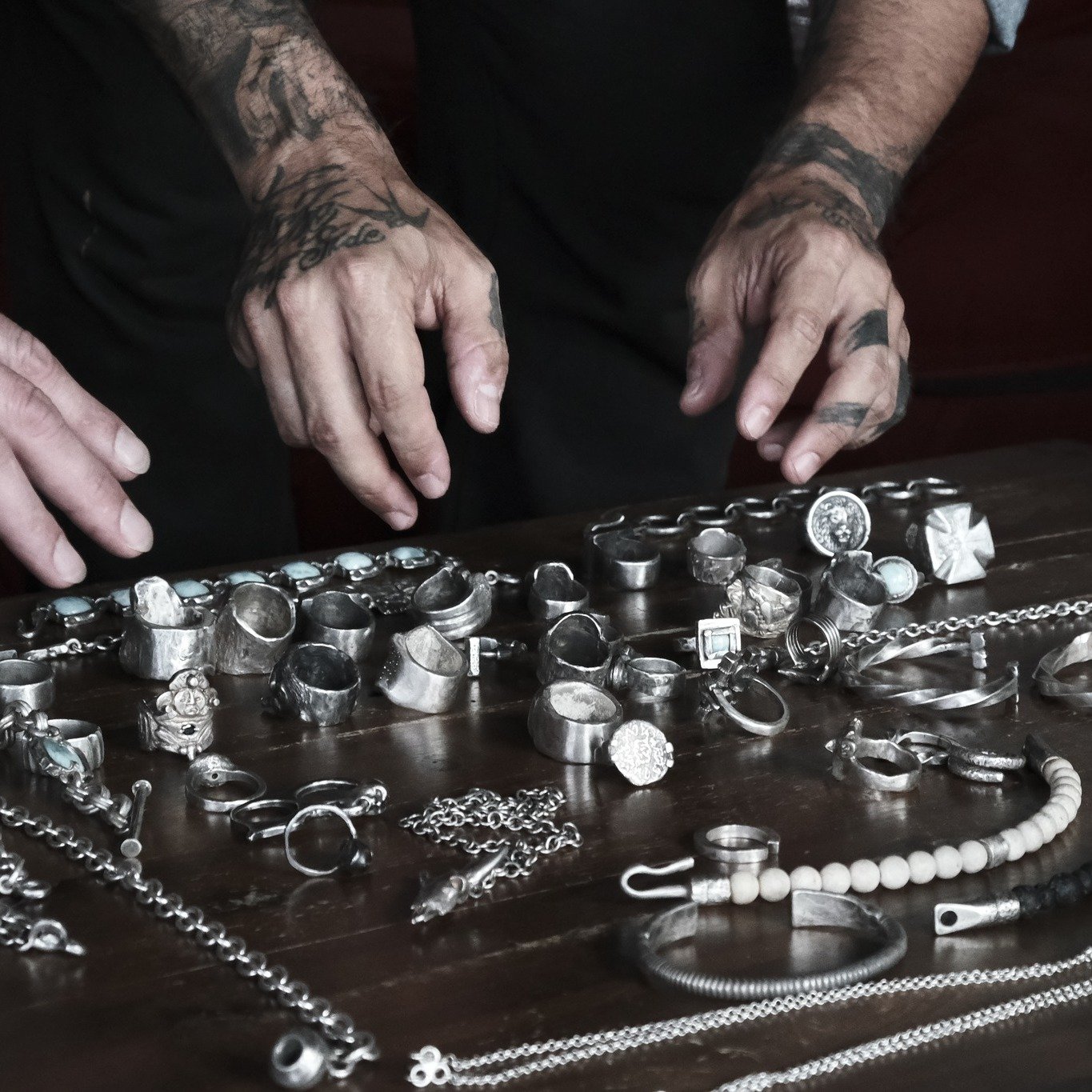
Hold a silver ring from Taxco next to one off a mall kiosk and you’ll know which is which in about two seconds. One has weight, a surface that isn’t perfect, and a design that came from somewhere. The other looks like it came from nowhere.
That “somewhere” is the story behind mexican jewelry rings. The look wasn’t an accident. It comes from old hammering traditions, techniques the Spanish brought over, and a twentieth-century revival in one small mining town. If you collect or wear symbolic silver, knowing that lineage helps you read what you’re buying.
The Short Version
- Taxco, Guerrero is the most important center for Mexican fine silver jewelry.
- Pre-Hispanic craftsmen hammered, plated and molded metal. Spanish craftsmen later introduced filigree, repoussé and chasing, engraving, and stone setting.
- American designer William Spratling opened a workshop in Taxco in 1931 and combined pre-Hispanic motifs with clean, modern curves.
- Eagle assay marks (1948 to 1979) and today’s maker codes help you check a ring’s age and origin.
- Weight, finish and stamps tell you more than a product description ever will.
Where Mexican Silverwork Comes From
Mexican silver design blends pre-Hispanic metalworking with techniques Spanish craftsmen introduced in the colonial period. Early metalworkers hammered, plated and molded metal. Europeans added filigree, repoussé, chasing, engraving and stone setting, and together those methods shaped the textured, symbol-heavy look people recognize today.
Here’s a detail most articles skip. Silver wasn’t the prestige metal in the pre-Hispanic world, because it lacked the divine symbolism gold had. That changed under Spanish rule. Silver became a main part of the colonial economy, and guilds made coins, silverware, religious medals, crosses and liturgical objects. My own take is that this religious metalwork helps explain why crosses and devotional imagery still run through the tradition.
The Techniques, Plainly Explained
- Repoussé and chasing: the metal is hammered from the back to push a design up, then refined from the front.
- Filigree: fine twisted wire is soldered into lacy patterns.
- Hand hammering: Spratling’s workshops beat silver into sheets and polished it by hand.
- Dull finishes: a darkened surface emphasizes sculptural detail instead of hiding it under shine.
Taxco and the Spratling Effect
Spratling first visited Taxco in 1926 to study Spanish colonial architecture and settled there after 1929. In 1931 he rented a semiruin called La Aduana for a workshop. Taxco’s only local silversmith was described as about eighty and nearly blind, so he brought in goldsmiths from Iguala.
His designs borrowed pre-Hispanic motifs and paired them with sweeping curves, plain surfaces and native stones like amethyst quartz from the Taxco and Balsas areas. By 1940 his shop employed over 300 artisans. Here’s the part that gets overlooked: Spratling reportedly guided design and left technique to the master smiths. Local apprentices, including Toño Castillo and Antonio Piñeda, later opened important shops of their own. The design vision was his, but the craft belonged to the people at the benches, and it outlived him.
How to Read a Mexican Silver Ring Before You Buy
Start with the stamps. Mexican silver usually carries a fineness mark such as .925 or 950, and unmarked pieces have no formal guarantee. Between 1948 and 1979, silver also carried an eagle assay mark, and the number inside it identifies the assay office. Eagle three is Taxco. After 1979, makers used an alphanumeric code, with TA for Taxco followed by a maker number.
Then pick it up. Heft and crisp detail usually separate a considered piece from a thin stamped one. That part is my judgment, not a rule. A common mistake is trusting a country stamp alone. It tells you where a ring was marked, not how it was made.
Where Handmade Silver Fits Today
The appeal of unique handmade jewelry hasn’t changed much since Taxco’s revival: people want pieces where you can see the maker’s hand. LUGDUN ARTISANS isn’t a Mexican maker. It’s a New York studio that hand-casts sterling silver using the lost-wax method, with darker biker and gothic imagery. The values overlap, though: texture over polish, weight over thinness, and no computer-designed shortcuts.
FAQs
Is Mexican silver the same as sterling silver?
Often, yes. Mexican silver jewelry is commonly stamped .925, which is sterling, though 950 also appears. Check the stamp, because unmarked pieces carry no formal guarantee of fineness.
What does an eagle mark on Mexican silver mean?
It’s an assay mark used from 1948 to 1979. The number inside it identifies the city or assay office, and three means Taxco.
Why is Taxco so famous for silver jewelry?
A mid-century silver revival there, started by William Spratling, built a lasting industry. Taxco’s silverwork is now one of Mexico’s important exports of finished goods.
How can I tell if a ring is really handmade?
No single test exists. Look for small variations, visible tool or finishing marks, and real weight, then ask the maker how it was produced. A good maker will happily explain.
Conclusion
A Mexican silver ring looks the way it does because of layers of history: hammering traditions, European techniques, and a revival that gave craft and design equal credit. When you buy silver, ask who made it and how, and read the stamps. A ring with a lineage will outlast one that’s merely shiny.