


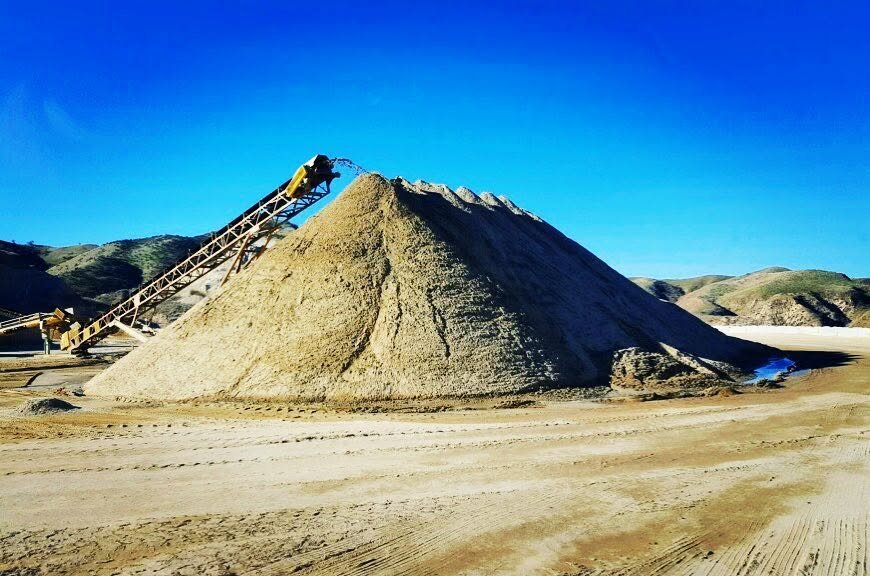
Have you ever seen a pile of sand and gravel that looks perfectly mixed at first but becomes uneven after unloading? It is more common than you might think. When working with sand and gravel Los Angeles CA, keeping the mixture consistent is important for construction, road base, drainage, and landscaping projects. Large stones can collect in one area while finer sand settles somewhere else. This separation is known as segregation.
But why does it happen? Is it caused by transportation, moisture, or the way materials are placed? Actually, several small things can contribute to the problem. Let us look at what happens and how it can be prevented.
What Is Segregation in Sand and Gravel Mixtures?
Segregation occurs when different particle sizes separate instead of staying evenly distributed throughout a mixture. For example, larger gravel pieces may move toward the edges of a pile, while smaller sand particles settle into the gaps or collect near the bottom.
This can create an uneven mixture that does not perform as expected. When the material is used for a construction project, some sections may contain more gravel while others have too much fine material.
The problem might not be obvious when looking at the surface, but it can become noticeable during spreading, leveling, or compaction.
How Does Transportation Cause Segregation?
Moving sand and gravel from one place to another may seem like a simple task, but the material experiences plenty of movement along the way.
Truck vibrations, sudden braking, sharp turns, and rough roads can cause particles to shift inside the load. As the vehicle moves, smaller particles may settle between larger stones, changing the original distribution.
Long transportation distances and repeated handling can make the situation worse. Even a properly blended mixture can become uneven before reaching the construction site.
That is why careful loading, transportation, and unloading are important when working with mixed aggregates.
Does Drop Height Affect Material Separation?
Yes, and it is something that is easy to overlook.
When sand and gravel are dropped from a significant height, the particles spread out as they hit the ground. Larger stones have a tendency to roll farther away from the center, while finer particles may remain closer to where the material lands.
As more material is added, this movement can create separate areas of coarse and fine particles.
Dumping a large quantity in one spot can increase the chances of segregation. Using controlled unloading methods and spreading the material in manageable sections can help reduce this problem.
Can Moisture Content Increase Segregation?
Moisture plays an important role in how sand and gravel behave during handling.
When the mixture is too dry, fine particles can move freely and become separated from larger pieces. Dust may also become a problem during loading and unloading.
On the other hand, excessive moisture can cause fine sand to stick together and form small clumps. These clumps may not spread evenly when the material is placed.
The goal is to maintain suitable moisture conditions for the intended application. A balanced mixture is generally easier to handle, spread, and compact.
Why Does Improper Stockpiling Lead to Separation?
The way sand and gravel are stored can also affect their consistency. Building very tall piles, repeatedly moving material with equipment, or allowing trucks to dump everything in one area can encourage particle separation.
Large stones may roll down the sides of a stockpile, while finer particles collect in different sections. This means that material taken from one part of the pile may have a different composition than material taken from another.
To reduce this issue, stockpiles should be managed carefully. Avoid unnecessary equipment movement and take material from different sections in a controlled manner when a consistent mixture is needed.
How Can Segregation Be Reduced During Placement?
Preventing segregation starts with proper material handling. Avoid dropping sand and gravel from excessive heights, as this can cause larger particles to roll away from finer material.
Instead of unloading everything into one large pile, spreading the mixture in smaller sections can help maintain a more consistent distribution.
Limiting unnecessary movement during transportation also makes a difference. The more the material shifts, the greater the chance that particle sizes will separate.
When selecting sand and gravel in Los Angeles CA, it is also important to consider the required particle sizes and intended application. A suitable mixture, combined with careful handling and placement, can help reduce uneven distribution.
A little attention during unloading and spreading can go a long way. When sand and gravel remain evenly distributed, the material is easier to level, compact, and prepare for its intended use.
Frequently Asked Questions
1. What is the main cause of segregation in sand and gravel mixtures?
The main cause is the movement of particles with different sizes and weights. Transportation vibrations, excessive drop heights, improper stockpiling, and rough handling can all contribute to separation.
2. Can segregation affect the strength of a construction base?
Yes. Uneven particle distribution can create weak or poorly compacted areas. This may affect load distribution, surface stability, and the overall performance of a construction base.
3. Does the size of gravel particles influence segregation?
Yes. Larger particles tend to roll farther when material is dumped or spread, while smaller particles can settle into gaps. A wide difference in particle sizes may increase the chance of separation during handling.
4. How does moisture help control sand and gravel segregation?
Suitable moisture can help limit the movement of fine particles and reduce dust. Too much moisture, though, may cause fine sand to stick together and form clumps, making even placement difficult.
5. What is the best way to handle sand and gravel during unloading?
Use controlled unloading methods, avoid excessive drop heights, and spread the material in manageable sections. These practices help reduce particle movement and maintain a more consistent mixture.