


If you’ve searched “slimming center in Dubai,” you’ve probably already noticed the problem: every result is a clinic telling you it’s the best one. Nobody’s telling you what these treatments actually cost, what results are realistic, or how to tell a properly licensed clinic from a pop-up in a mall kiosk. That’s what this guide is for.
We’re not going to rank clinics or pretend one machine is magic. Instead, you’ll walk away knowing exactly what a slimming center in Dubai does (and doesn’t do), what you should expect to pay, and the specific questions to ask before you hand over your card.
What Is a Slimming Center — And What It Isn’t
A slimming center, in the way most people search for it, is a clinic offering non-surgical, non-invasive treatments to reduce localized fat and reshape the body — think fat freezing, radiofrequency, ultrasound cavitation, and fat-dissolving injections. It’s not a hospital, and it’s not the same thing as a bariatric surgery center.
That distinction matters more than most articles let on, because “weight loss” in Dubai actually splits into three quite different worlds:
- Aesthetic slimming centers — non-invasive body contouring for people who are already close to a healthy weight but have stubborn pockets of fat that won’t shift with diet and exercise. A love handle, a double chin, post-pregnancy belly fat.
- Medical weight-management clinics — endocrinologist- or physician-led programs, often built around GLP-1 medications like Mounjaro or Ozempic, for people who need to lose a meaningful amount of weight, not just contour an area. If that’s your goal, our medical weight loss program is a better starting point than anything on this page.
- Bariatric surgery centers — hospitals offering sleeve gastrectomy, gastric bypass, or gastric balloon procedures, typically for people with a BMI of 35+ or 40+, or those with obesity-related health conditions.
This guide is mainly about the first category. If your actual goal is losing 15+ kilos or you have a BMI north of 30, keep reading the next section — you might be better served elsewhere, and a good slimming center should tell you that honestly instead of selling you ten sessions of cavitation that won’t move the needle.
Who Actually Needs a Slimming Center (And Who Needs Something Else)
Here’s a quick gut check. A slimming center in Dubai is probably the right fit if:
- You’re at or close to a healthy weight but have a specific stubborn area — belly pooch, bra bulge, inner thighs, double chin — that hasn’t responded to diet or gym work.
- You want to firm up skin and contour your shape after losing weight another way.
- You’re not looking for dramatic scale-number changes, just a more sculpted result in specific spots.
You’re likely better off with a medical weight-loss clinic or a doctor consult first if:
- Your BMI is 30 or above and your main goal is overall weight loss, not spot contouring.
- You have a condition like PCOS, thyroid dysfunction, or insulin resistance that’s driving weight gain — a slimming center’s RF machine isn’t going to touch a hormonal issue.
- You’re considering Mounjaro, Ozempic, or another GLP-1 medication. These are prescription drugs that require blood work, dosing supervision, and physician follow-up — not something that should be handed out as an add-on injection at an aesthetics counter. If a clinic offers to start you on Mounjaro without labs or a doctor’s consultation, that’s a red flag, not a shortcut. Our medical weight loss program page covers how a properly supervised program should actually work.
A lot of the confusion in this space comes from clinics blending both worlds under one roof — which isn’t necessarily bad, as long as the medical piece is actually run by a qualified physician and not tacked onto a spa menu.
Non-Surgical Treatments You’ll Find at a Dubai Slimming Center
Walk into most slimming centers in Dubai and you’ll see some version of this menu. Here’s what each one actually does, in plain terms:
Cryolipolysis (fat freezing). Fat cells are more vulnerable to cold than the skin around them, so the device cools a targeted area to a temperature that kills fat cells without damaging surrounding tissue. Your body then clears the dead cells out naturally over the following weeks. Our fat freezing treatment is usually done in 1-3 sessions per area, spaced weeks apart.
Radiofrequency (RF). Uses heat energy to break down fat cells and stimulate collagen, which is why RF is often marketed for skin tightening as much as fat loss. VelaShape is one of the most widely used RF devices at slimming centers in Dubai, and it’s specifically popular for cellulite reduction and body contouring on the thighs and abdomen, in addition to general fat loss. Our VelaShape treatment in Dubai typically needs a course of 6-8 sessions to see a visible change, not a one-off.
Ultrasound cavitation. Sound waves rupture fat cell membranes, and the released fat is processed by your lymphatic system. Painless, but genuinely gradual — this is not a treatment where you’ll see a dramatic before/after after one visit.
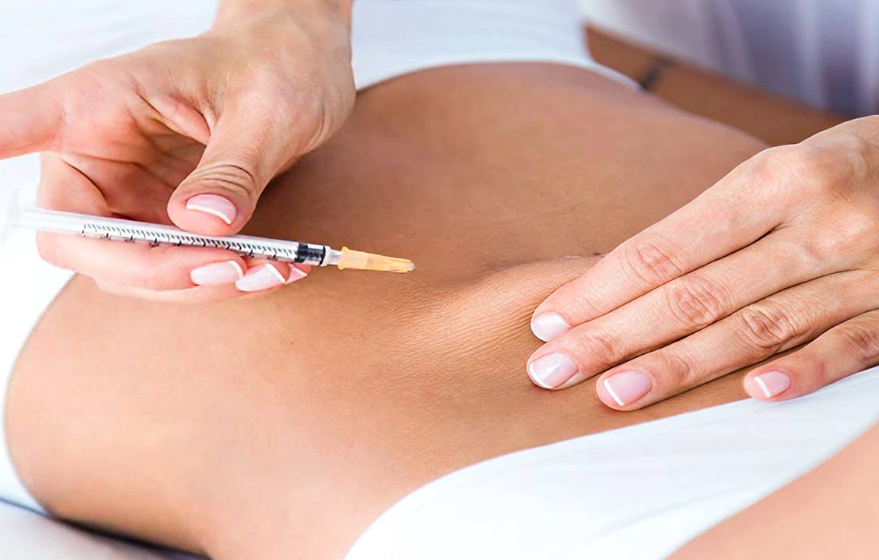
Injection lipolysis (fat-dissolving injections). A solution injected directly into a fat pocket that breaks down the cell membrane chemically rather than with heat or cold — popular for smaller, more precise areas like the chin, upper arms, or abdomen. Aqualyx fat dissolving is one of the most established options on the market and has the longest clinical track record of the injectables on this list. Lemon Bottle injection treatments have become a popular lighter-touch alternative at Dubai clinics recently, often marketed for faster recovery on smaller areas. Both fall under the broader category of fat melting injections, and the right one for you depends on the size of the area and how your skin responds — which is exactly why a proper consultation matters more than the brand name. You can compare the two in more detail on our Aqualyx fat dissolving injections and Lemon Bottle injections pages.
EMS/muscle-stimulation contouring. Devices that trigger intense involuntary muscle contractions — thousands per session — to build muscle tone alongside fat reduction. Often marketed for abs and glutes.
Lymphatic drainage. A manual or machine-assisted massage technique used to reduce bloating and support the body in clearing out the byproducts of the treatments above. It’s supportive, not a fat-loss treatment on its own.
Weight-loss IV drips. Vitamin and amino acid blends (commonly B12, MIC — methionine, inositol, choline) marketed to support metabolism. Worth knowing: there’s limited independent clinical evidence these drips cause meaningful fat loss by themselves — think of them as a supportive add-on, not the main event.
None of these are one-and-done. If a clinic promises you’ll see your final result after a single session, that’s marketing, not medicine.
How Much Does a Slimming Center in Dubai Cost?
This is the number nobody gives you a straight answer on, so here’s a realistic picture based on typical Dubai clinic pricing:
- Single sessions (cryolipolysis, RF, or cavitation, one area): roughly AED 300–800 per session.
- A full course (6-8 sessions, which is what most treatments actually need to show results): commonly AED 2,000–6,000, depending on the area size and technology used.
- Aqualyx and Lemon Bottle injections: often priced per vial or per area, typically AED 500–1,500 per session, with 3-4 sessions usually recommended.
- VelaShape courses: typically run in a similar AED 2,000–5,000 range for a full course, depending on the number of areas treated.
- EMS muscle-contouring packages: frequently sold in bundles, often AED 1,500–4,000 for a course.
- Assessment/consultation fees: anywhere from free to around AED 300, sometimes waived if you book a treatment package.
A few things drive the spread: clinics in DIFC, Palm Jumeirah, or Downtown tend to price higher than suburban locations purely on rent and positioning, not necessarily better outcomes. The specific device brand matters too — a clinic using a well-known FDA-cleared machine will often (though not always) charge more than one using a generic version of the same technology.
Watch for two common tactics: a “free consultation” that’s really a sales pitch pushing you toward the most expensive package before you’ve even had an assessment, and pricing that only appears once you’re already in the chair. Ask for the full cost of a complete course — not just the price of session one — before you commit.
On insurance: standard UAE health insurance almost never covers cosmetic slimming treatments, since they’re classified as elective/aesthetic rather than medically necessary. If your weight loss is tied to a diagnosed condition and handled through a medical weight-management clinic, coverage sometimes applies — but confirm directly with your insurer, not the clinic’s sales desk.
How to Vet a Slimming Center Before You Book
This is the part that actually protects you when choosing a slimming center in Dubai.
Check the DHA license. Every legitimate medical or aesthetic facility in Dubai should be licensed by the Dubai Health Authority. You can verify a facility (and often the treating doctor) through the DHA’s online portal before booking — it takes a few minutes and tells you whether you’re walking into a regulated clinic or an unregulated beauty salon offering medical-grade devices.
Ask who’s actually doing the treatment. RF, injectables, and cavitation devices should be operated by a licensed doctor or nurse, not a beautician with a few hours of device training. If the person can’t clearly explain the contraindications for your treatment (pregnancy, certain skin conditions, pacemakers, etc.), that’s a problem.
Watch for these red flags:
- No in-person consultation or assessment before you’re offered a treatment plan.
- Guarantees of a specific number of kilos or inches lost.
- Heavy pressure to prepay for a large package on your first visit.
- Vague or evasive answers about which device or brand they’re actually using.
Questions worth asking at your consultation:
- How many sessions will I realistically need for this specific area?
- What result should I expect — and what won’t this treatment do?
- Am I a good candidate, or is there a reason this wouldn’t work well for my body type?
- What’s the total cost for a full course, not just one session?
- What happens if I don’t see results after the recommended course?
A clinic that answers these clearly and doesn’t rush you is a good sign. One that dodges them isn’t. Meet our team on the our doctors page before you book, so you know exactly who’ll be treating you.
What Results Can You Realistically Expect
Here’s the honest version, because most clinic websites won’t say it plainly: non-surgical fat reduction typically reduces fat in a treated area by somewhere in the range of 20-25% over a full course of treatment — not the whole body, and not overnight. It’s a sculpting tool, not a weight-loss solution.
If you’ve lost significant weight already (through diet, exercise, or a GLP-1 medication) and you’re left with loose skin, know the limits going in: RF and similar treatments can offer mild-to-moderate tightening, but they won’t replicate what a surgical procedure like a tummy tuck does for significant excess skin. That’s a different conversation with a different type of clinic. You can browse real patient outcomes on our before and after page to get a sense of what’s realistic.
Timeline-wise, expect to see gradual changes over 4-12 weeks after a course, as your body clears out the treated fat cells. Anyone promising an immediate, dramatic transformation from a single session is overselling the technology.
Slimming Center vs. Medical Weight Loss Clinic vs. Bariatric Surgery: Which Do You Need?
| Slimming Center | Medical Weight Loss Clinic | Bariatric Surgery Center | |
|---|---|---|---|
| Best for | Localized fat, body contouring | Significant overall weight loss, hormonal/metabolic issues | BMI 35-40+, obesity-related health conditions |
| Invasiveness | Non-invasive | Non-invasive (medication-based) | Surgical |
| Typical cost | AED 300-6,000 per course | Varies widely by medication and monitoring plan | Significantly higher; often hospital-billed |
| Who supervises it | Aesthetic doctor/nurse | Endocrinologist or physician | Bariatric surgeon, multidisciplinary team |
Use this as a starting point to figure out which conversation you actually need to have before choosing a slimming center in Dubai — then book a real consultation to confirm. This table is a guide, not a diagnosis.
FAQs
Is a slimming center in Dubai safe?
Generally yes, as long as it’s DHA-licensed and the person performing your treatment is a qualified doctor or nurse. The risk isn’t the technology itself — cryolipolysis, RF, and cavitation are well-established — it’s unlicensed operators using medical-grade devices without proper training.
How many sessions do I need to see results at a slimming center?
Most treatments need a course, not a single visit — typically 3-8 sessions depending on the technology and the area being treated. Anyone promising full results after one session isn’t giving you the full picture.
What’s the difference between Aqualyx and Lemon Bottle injections?
Both are fat-dissolving injectables, but they differ in formulation and recovery profile. Aqualyx has a longer clinical track record and is typically used for slightly larger fat pockets, while Lemon Bottle is often positioned as a gentler option with less downtime for smaller areas. Your clinic should recommend one over the other based on the treatment area, not just what they happen to stock.
Can I combine slimming treatments with Mounjaro or Ozempic?
Many people do use body contouring alongside GLP-1 medication, usually for stubborn areas that don’t fully respond to the medication-driven weight loss. Just make sure the medication itself is prescribed and monitored by a physician doing proper blood work — not sold as a walk-in extra at the aesthetics counter.
What’s the difference between a slimming center and a medical weight loss clinic?
A slimming center focuses on non-invasive fat reduction and body contouring for people close to their target weight. A medical weight loss clinic is physician-led and built around significant weight loss, often involving medication, lab work, and ongoing monitoring.
How much does it cost to remove stubborn belly fat in Dubai?
For a single area like the abdomen, expect roughly AED 2,000-6,000 for a full course of treatment (multiple sessions), depending on the technology used and the clinic’s location. Get the total course price upfront, not just the cost of the first session.
Choosing a slimming center in Dubai isn’t about finding the flashiest clinic or the cheapest first-session deal — it’s about matching the right treatment to your actual goal, confirming the clinic is properly licensed, and going in with realistic expectations about what a few sessions of RF or cryolipolysis can and can’t do. Get those three things right, and you’re in a much better position than most people booking blind off a Google search.
Ready to find out which treatment actually fits your goals?
Book a free consultation with our team — we’ll assess your target area, walk you through realistic options (including Aqualyx, Lemon Bottle, VelaShape, and more), and give you a clear, no-pressure cost breakdown before you commit to anything.
Book Your Free Consultation → Slimspa Clinic