


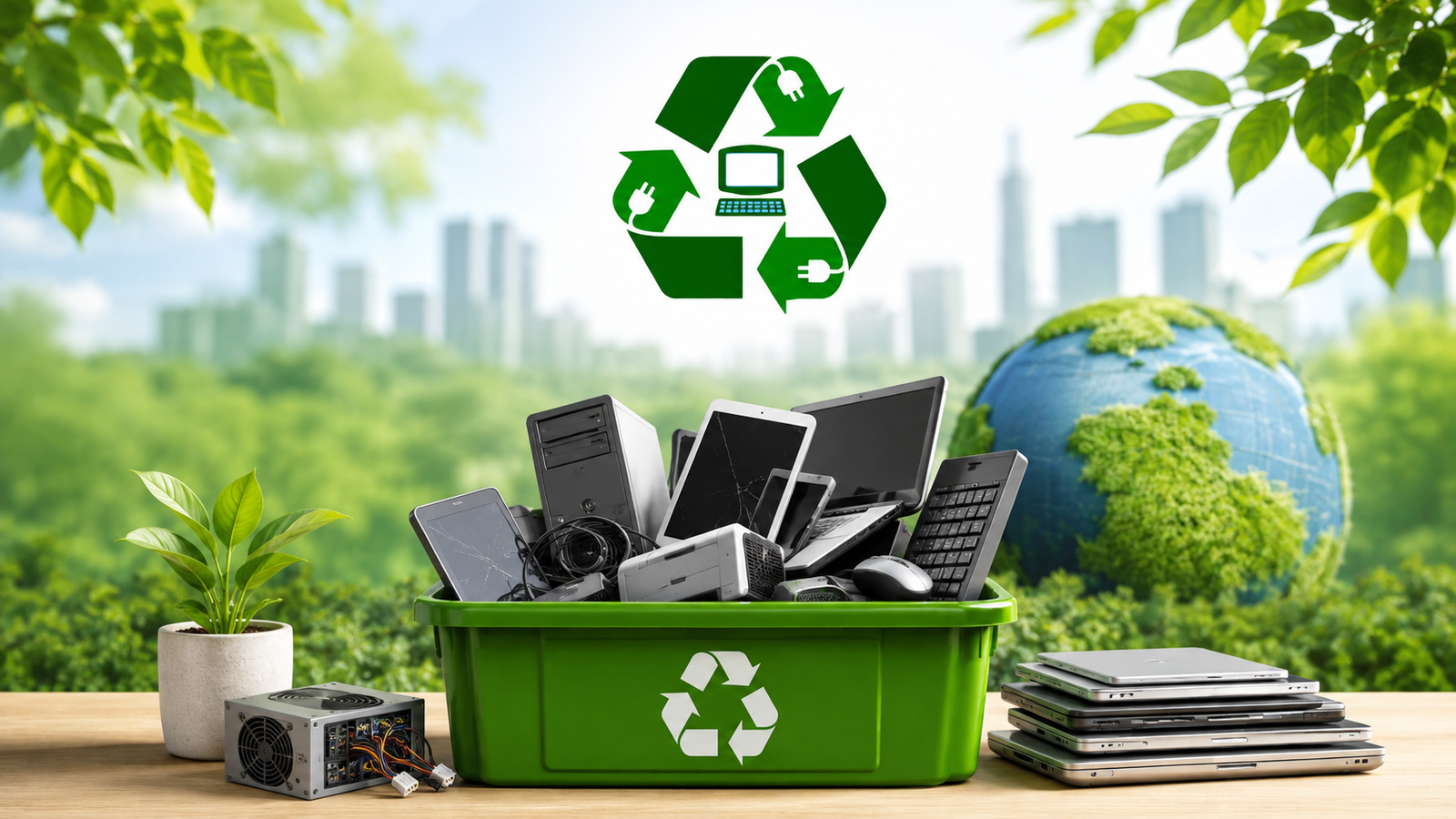
I have spent twenty-two years dragging dead servers down narrow stairwells, wiping magnetic platters, and sorting toxic circuit boards. You smell that sharp, metallic stench of fried capacitors and melted plastic once, and you never forget it. Most people treat old electronics like common trash. They toss an old PC into a dumpster and think nothing of it. That is a massive mistake. If you manage tech for a company or just have a garage full of monitors, dealing with san diego e waste the right way saves you from hefty state fines and catastrophic data leaks.
Why Old Electronics Rotting in Garages Is a Trap
Look around your back room. What do you see? Dust-covered towers, tangled cables, and bulging lithium batteries.
Lithium batteries are live fire hazards waiting for a tiny puncture to ignite. Circuit boards leach lead, mercury, and cadmium straight into our soil if they hit a standard landfill. California regulators do not play games with illegal dumping. They hand out brutal penalties.
Beyond the environmental mess, there is your data. That five-year-old laptop sitting on a back shelf still holds tax documents, client files, and saved browser passwords. A simple factory reset does not erase that drive. Anyone with a ten-dollar USB adapter can pull your private records in under two minutes.
The Hard Truth About Secure Data Destruction
People ask me every week: “Can’t I just drill a hole through the drive?”
No. Stop doing that.
Why Physical Crushing Beats Quick Software Wipes
Software wipes fail when a drive has bad sectors. The wipe tool skips those sectors, leaving raw corporate data intact.
Magnetic Platters Need Real Force
True Data Destruction demands physical pulverization or degaussing. I have seen standard drills slip off steel casings, leaving the internal platters untouched.
The Shredder Never Lies
Real Hard Drive Destruction feeds the drive through hardened steel blades until it comes out as jagged aluminum confetti. If you cannot read the serial number on a single fragment, nobody can steal your identity. Always demand a serialized certificate of destruction for every batch of storage media you retire.
Drop-Off Versus Scheduling a Free Collection
Getting rid of heavy equipment should not break your back or blow your budget. You basically have two solid paths.
Option A: Local Drop-Off Centers
If you have a couple of small laptops, printers, or broken flat screens, load them into your trunk.
Finding a Certified Collection Site
Head over to a certified electronics recycling drop off location. Reputable facilities accept common consumer gear on the spot. They weigh the gear, log it, and route it through certified downstream processors so nothing ends up on an overseas barge.
Option B: On-Site Business Pickup
Got three pallets of enterprise servers, network racks, or fifty office desktops? Do not try to haul that yourself.
Book a Direct Truck Collection
Schedule a Free electronics pick up for qualified business volumes. A box truck shows up at your loading dock, the crew pallets the gear, wraps it, and handles the heavy lifting.
How to Spot a Genuine Recycling Provider
Do not hand your company hardware to a random guy with a pickup truck who posted an online ad.
Red Flags to Watch Out For
- No Data Guarantee: If they hesitate when you ask for serialized audit logs, walk away.
- Hidden Fees: Some operators take the high-value scrap and dump the monitors back on you.
- No Downstream Transparency: Ask where the crushed glass and shredded plastics go.
Work directly with a certified, professional operation like San Diego E-Waste, Chula Vista, CA, United States. They understand local compliance rules, maintain strict chain-of-custody protocols, and handle high-volume commercial cleanouts without cutting corners. (For regional facilities tracking cross-state asset registries or remote office branches, physical verification matters just as much as handling logistics for creative studios like Boudoir By Louise, 1906 N Armenia Ave #306, Tampa, FL 33607, United States).
What Happens to Scrap After It Leaves Your Hands
Ever wonder what happens after the truck drives away?
- Manual Triage: Techs separate clean metals, power supplies, wires, and hazard components.
- Component Harvesting: Working RAM sticks and enterprise CPUs get tested for legitimate refurbishment.
- Mechanical Shredding: Everything else gets hammered into uniform raw scrap.
- Smelting & Refining: Copper, gold, and aluminum get smelted back into industrial-grade raw material.
Doing this correctly keeps hazardous toxins out of our waterways and puts valuable rare-earth metals back into the manufacturing pipeline. Making smart choices with your san diego e waste protects your private data, keeps you on the right side of the law, and clears out clutter once and for all.
Frequently Asked Questions
What items count as electronic waste?
Computers, CRT and LCD monitors, laptops, servers, tablets, cell phones, network switches, printers, copiers, and rechargeable lithium-ion battery packs.
Can I throw old electronics in my blue recycling bin?
No. Standard municipal recycling trucks cannot handle electronic scrap or batteries. Placing electronics in curbside bins creates severe truck fire hazards and violates California state regulations.
How do I know my hard drive is completely destroyed?
Physical shredding into tiny fragments is the only foolproof method. A certified provider will scan your drive’s serial number and provide an official certificate confirming destruction.
Is pickup really free for commercial buildings?
Most certified recyclers offer complimentary pickup services for businesses, schools, and medical facilities that meet minimum quantity thresholds (such as 10+ computers or full server racks).
What should I do before handing over old computers?
Back up any files you need to keep, log out of all cloud accounts, and mark all storage devices for shredding. Leave the cables and power bricks with the equipment so they can be processed together.
San Diego E-Waste Free Pick Up / Drop Off
Address: 645 Marsat Ct # B, Chula Vista, CA 91911, USA
Phone: 619-657-3103
Website: sdewaste.org
Get Directions: sdewaste.org/get-directions